The article that follows, written by one of our guides, appears in the latest edition of the Group Travel World Magazine.
THERE’S NOTHING SPECIAL ABOUT HEREFORD …. IS THERE?
Of course there’s the Cathedral, which is magnificent, and the Mappa Mundi, which is unique, but what else is there?
This is what I asked myself on my first visit prior to moving here, seven years ago. Upon emerging from COVID confinement almost two years later, I wondered how to find the answer to my question …. and then I discovered the Guild of Mayor’s Guides. Since its inception in 1981, this volunteer organisation has promoted the historic city to residents and visitors alike, by leading regular walking tours of the city centre, shining a light on the hidden depths of history and the catalogue of colourful characters that make Hereford so fascinating.
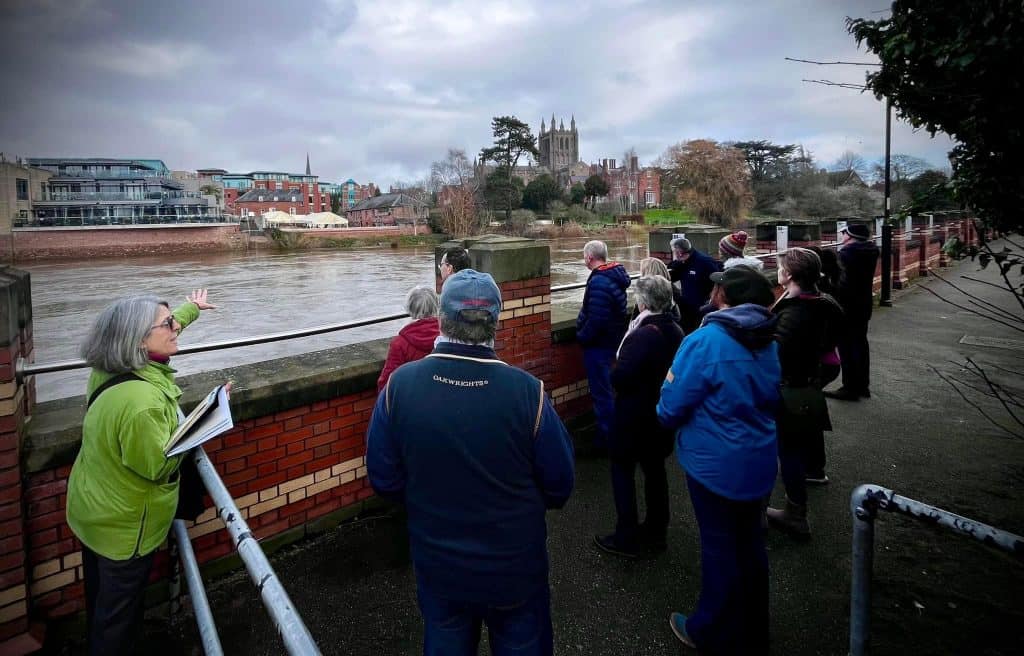
As an ignorant “incomer” I appreciated the thorough training course, exam and shadowing walks with established Guides, prior to being let loose on the unsuspecting public! But that was just the beginning of an ongoing, endless journey of delightful discovery and learning that has made me fall in love with this modest but historic market city.
Established and defended by Saxon Kings, extended and fortified by Norman Marcher Lords, the strategic advantage of this place, positioned on the River Wye in the borderlands, made it key for defence against Welsh attacks. Thus, from the 10th century it had a cathedral and a castle. Granted its City Charter by Richard I in 1189, through the Middle Ages it became a centre of learning and art, and a magnet for pilgrims visiting the shrines of not one but two saints, Thomas Cantilupe, 45th Bishop of Hereford, and Ethelbert the King, to whom the Cathedral is dedicated together with St Mary the Virgin.
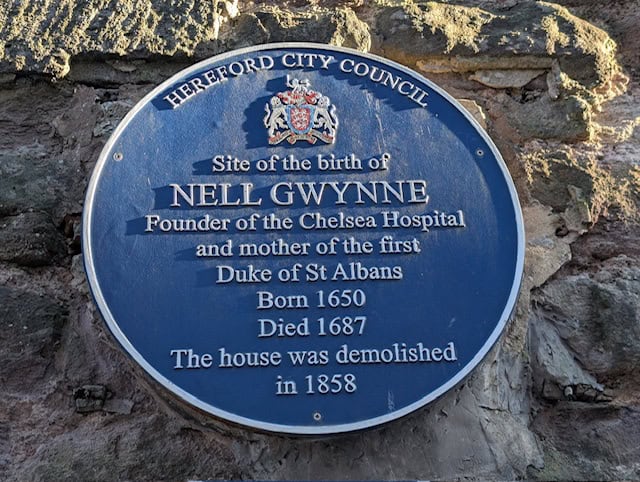
At the beginning of a tour someone once asked me “Apart from the ‘e’ and the ’t’, what is the difference between Hereford and Hertford?” Well, where do I start?!! It survived the turbulent, murderous years of the Anarchy, the Wars of the Roses and the Reformation. Besieged by Scottish soldiers recruited by the Parliamentarians during the English Civil War, its loyalty to the King earned it the embellishments to its Coat of Arms that we Guides wear with pride on our badges today. This is the place where Nell Gwynne was born – yes, I know Oxford and London both claim her too, but we can explain why they’re both wrong …. probably! It was here that St John Kemble was martyred, Owen Tudor was executed, and Hugh Despenser …. well his fate was even nastier! Other characters include the man who invented the first photographic light meter and proposed the theory of Ley Lines as well as musicians, actors, artists, poets, Victorian philanthropists, Canary Girls and Suffragettes …. and we mustn’t forget Lord Nelson! We have had a castle to rival Windsor and a market hall once described as “the stateliest building in the kingdom”. There’s been
ship building, cider making, Hereford cattle breeding, wife selling (yes, really!) …..
seriously, the list of Hereford’s fascinating facets is just about endless!
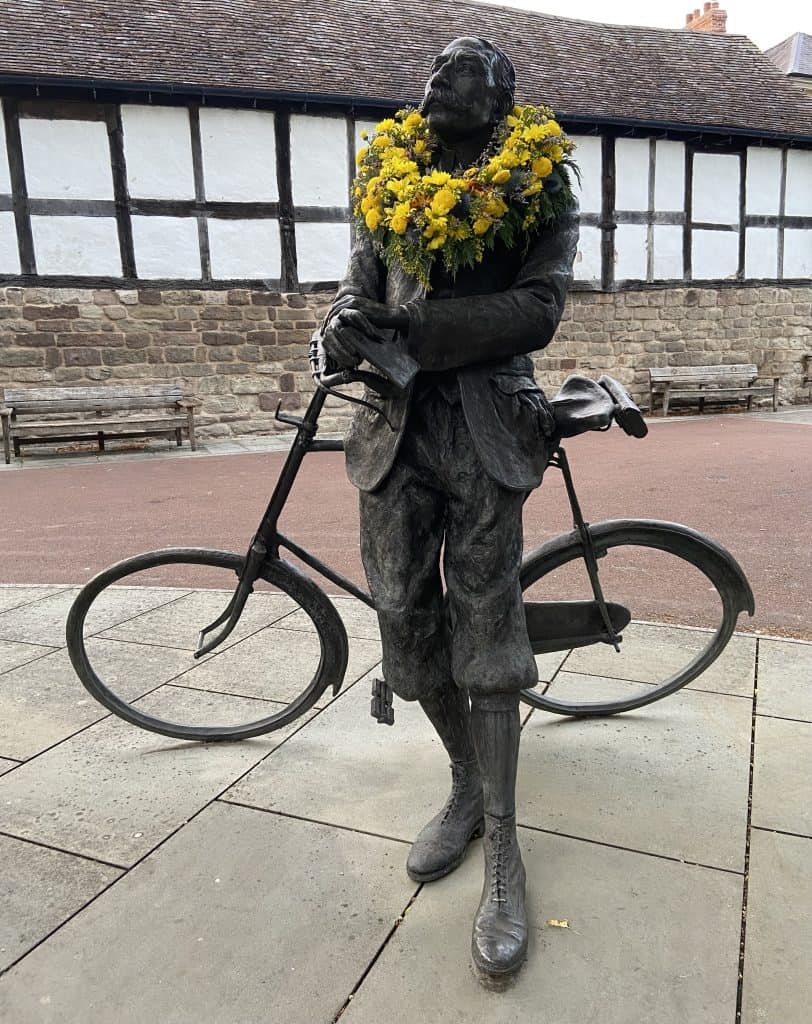
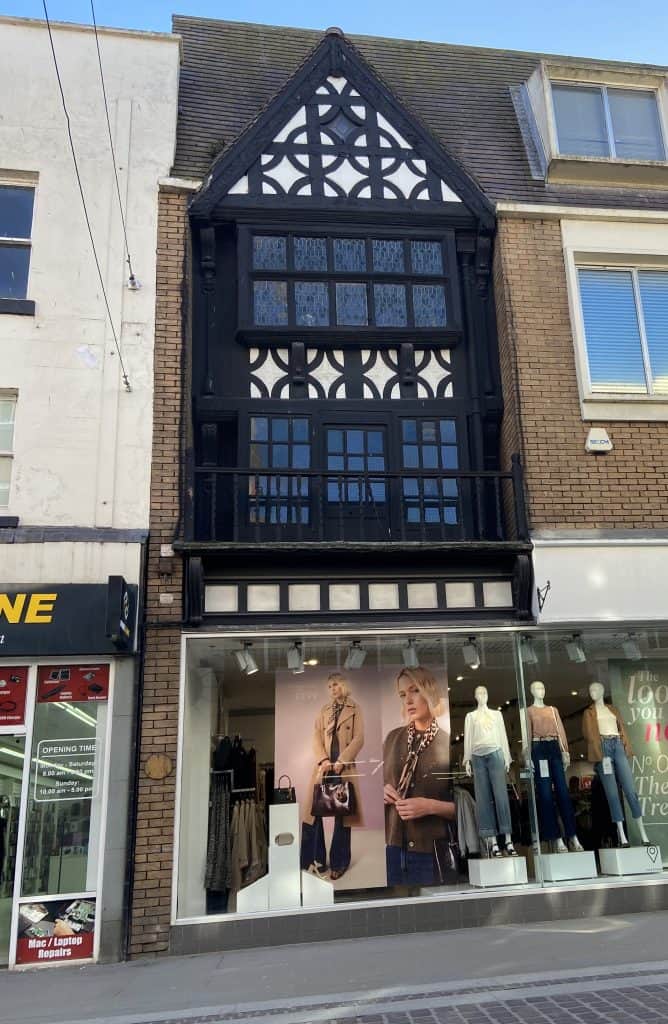
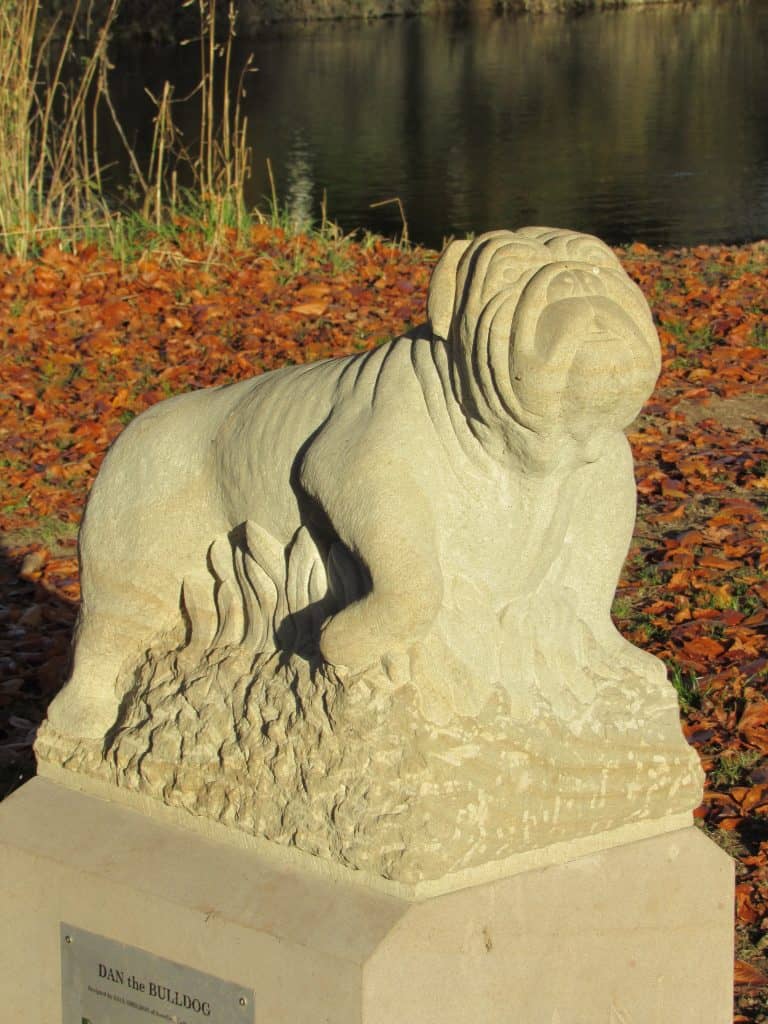
Naturally we can’t cover it all in a mere 90 minute walking tour. All our Guides take their own routes through the city, highlight different places of interest and relate different stories. If your tour crosses the river you will encounter Dan the Dog, whose biggest admirer was none other than Sir Edward Elgar, Hereford resident for several years. Dan was the inspiration for the 11th Enigma Variation, one of Elgar’s most well loved compositions. The Guild of Mayor’s Guides’ fund raising means his new stone statue now graces the river bank, and his story never fails to enchant and delight our walkers. If you are led through the Market Square you will probably look up at the 17th century timber framed building, the
Apothecary’s house, and hear the tale of why it’s more commonly known as “The House That Moved”, and if you cross Castle Green you will see the remnants of the castle and its moat as well as the column dedicated to Horatio Lord Nelson that predates Trafalgar Square by some 40 years.
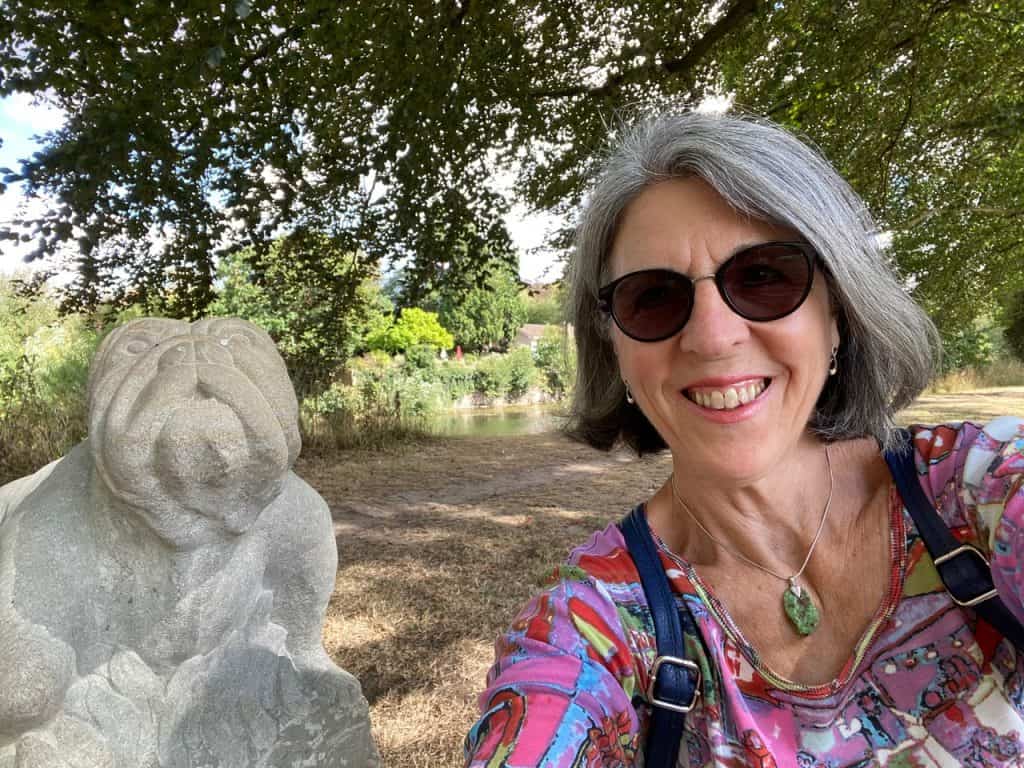
Guiding can be particularly rewarding when visitors have a connection to the city. One guide met a delightful American couple in his group, whose family name of Kemble had brought them to Hereford in search of their ancestry. Our guide showed them the home of Roger Kemble, founder of the great 18th century acting dynasty including Sarah Siddons and Fanny Kemble. He then took them to St Francis Xavier Catholic Church where he was able to introduce them to the priest. As recent converts to the Catholic faith, they were particularly moved to hear the story, and view the holy relic, of St John Kemble, martyred in 1679 for preaching his faith during its prohibition during the English Reformation.
If you have a particular interest we can tailor our bespoke walks as required. Historic Hereford is the most popular but we offer many specialist subjects as well. Our bespoke walks for groups are available all year round. Walks usually last 90 minutes approximately but can be adjusted to suit. We take a maximum of 15 people per guide group and can provide as many guides as is required. Coaches can be met at the drop off point outside the Cathedral in Broad Street. A walk can be fully accessible for wheelchair users.
To find out more about our Historic Hereford walking tour, and the many other bespoke walks available, check out our website https://herefordguidedwalks.org.uk/bespoke-walks/ or contact our Bookings Officer to discuss your requirements: e mail bookings@herefordguidedwalks.org.uk or Mobile: + +44 7947 92449